










From Kitchen Table to GMP: How to Build a Small Supplement Production Line Under $50K
Many supplement brands start at the kitchen table: a great idea, a few kilos of raw material, and a dream. But retailers, Amazon, and serious wholesale customers quickly start asking the same questions: Where do you manufacture? and Is your production GMP-compliant?
The good news: you don’t need a million-dollar factory to take your brand seriously. With smart planning, you can build a small, GMP-ready supplement production line for under $50,000 and grow from small batches to stable, repeatable production.
This guide walks you step by step through the equipment, layout, and budget you need to move from “kitchen table” to a real production room—using capsule filling equipment, packaging machines, and best practices tailored to small supplement brands.
What Does “GMP-Ready” Mean for Small Supplement Brands?
In the U.S., dietary supplements fall under 21 CFR Part 111, which sets out current Good Manufacturing Practice (cGMP) requirements. You do not have to be a giant pharmaceutical company to respect GMP principles. For a small brand, “GMP-ready” usually means:
- Cleanable dedicated space for production and packaging.
- Defined procedures (SOPs) for weighing, mixing, filling, cleaning, and labeling.
- Documented batch records and equipment logs.
- Equipment that can be cleaned, maintained, and operated consistently.
Our goal is to design a small production line that checks these boxes without exceeding a $50K equipment budget.
Step 1: Plan Your Product and Batch Size
Before choosing any machines, answer three key questions:
- What dosage form? This guide focuses on capsules, which are ideal for small lines because they are flexible and require less equipment than tablets or gummies.
- How many bottles per batch? Example: 500 bottles x 60 capsules = 30,000 capsules per batch.
- How often will you run this batch? Monthly? Weekly? Only a few times per year?
Your answers will determine the right capsule filling machine and packaging capacity.
Step 2: Choose the Right Capsule Filling Capacity
For a sub-$50K production line, most brands start with either a manual or semi-automatic capsule filling machine.
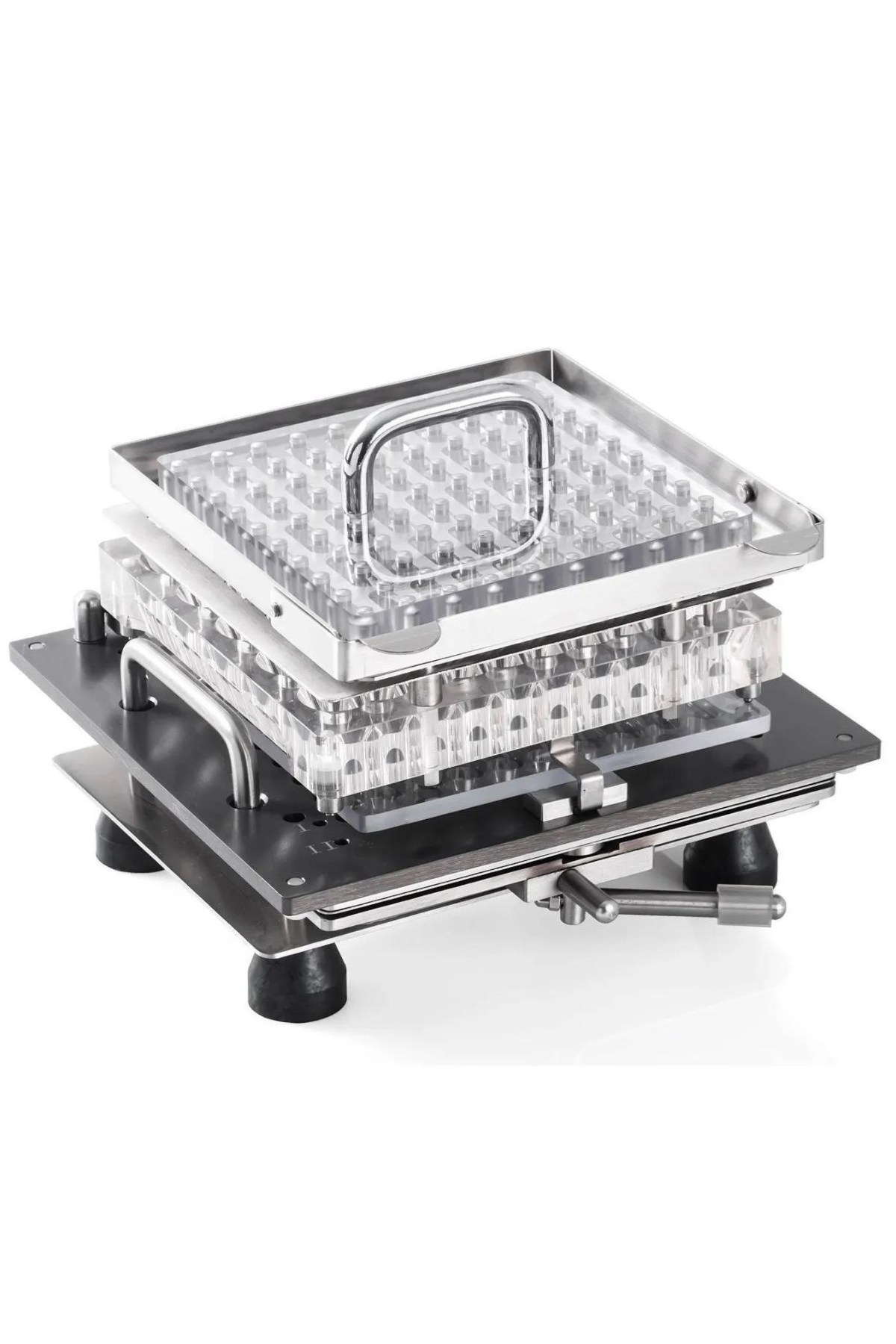
Option A: Manual Capsule Filler (Lean Startup Mode)
A high-quality manual capsule filling machine is perfect when:
- You are launching your first or second product.
- Your batches are under ~100,000 capsules at a time.
- You want to minimize risk and keep capital costs low.
With a 100-hole manual capsule filler and a good operator, you can realistically produce 2,000–2,500 capsules per hour. This is enough for many early-stage brands, especially if you schedule production across several days.
Start here: Leadlife Manual Capsule Filling Machines
Option B: Semi-Automatic Capsule Filler (Growth Mode)
If your brand already has traction or you’re working with multiple clients, a semi-automatic capsule filling machine may be a better long-term choice.
- Typical output: 10,000–30,000+ capsules per hour.
- Much lower labor cost per capsule than manual filling.
- Better consistency and easier documentation for audits.
Many brands choose a semi-auto machine once they consistently manufacture 50,000+ capsules per month or when they want to standardize production from the beginning.
Explore options: Leadlife Semi-Automatic Capsule Fillers
Option C: Automatic Capsule Filler (Future Scale)
A fully automatic capsule filling machine can produce 30,000–100,000+ capsules per hour and is ideal for large facilities. However, it will usually consume most or all of a $50K budget by itself.
For many small brands, automatic encapsulation is a Stage 3 upgrade after proving stable demand. But it’s useful to understand your future path at the planning stage.
See what full-scale looks like: Automatic Capsule Filling Machines
Step 3: Secure a Reliable Capsule Supply
No production line works without reliable, consistent capsules. For a small GMP-ready operation, look for:
- Gelatin and HPMC (vegan) options in sizes 000–5.
- Stable, repeatable dimensions so they run smoothly on your capsule filler.
- Documentation such as COA, allergen statements, and country of origin.
Buying capsules and machines from the same partner helps ensure better compatibility and faster troubleshooting.
Shop capsules: Empty Gelatin & Vegan Capsules (Bulk)
Step 4: Add Basic Mixing and Weighing Capability
Even a small supplement line needs reliable mixing and weighing tools:
- Analytical and bench scales for actives and excipients.
- Food- or pharma-grade mixers or blenders (V-blender, double-cone mixer, or even smaller lab mixers depending on batch size).
- Stainless-steel scoops, containers, and funnels for handling powders.
For tight budgets, you can start with simpler mixing options, but plan to move to professional mixers as batch sizes increase. Consistent blending is critical for dose uniformity and GMP expectations.
Step 5: Design a Simple Bottling & Packaging Line
Once capsules are filled, you need a way to get them into bottles (or pouches) efficiently and safely. For a small line under $50K, consider this minimal bottling setup:
- Counting and filling – tabletop capsule counter or counting funnel (manual early on, then small electronic counters).
- Capping – semi-automatic or manual capper depending on volume.
- Induction sealing or safety seal – protects product integrity and builds customer trust.
- Labeling – manual label applicator first, then semi-auto labeler once volume justifies it.
You do not need to buy everything at once. Many brands start with manual or semi-manual bottling and add automation step by step as sales grow.
For help choosing specific bottling and packaging machines for your budget, contact Leadlife Health for tailored recommendations.
Step 6: Create a Clean, Logical Room Layout
Even if your production space is small, a clear layout makes GMP compliance much easier. Think in terms of flow:
- Raw material receipt & quarantine – dedicated shelving for incoming ingredients and packaging.
- Weighing & mixing area – scales, mixers, and documented weighing procedures.
- Encapsulation area – your manual, semi-auto, or automatic capsule filler.
- Bottling & packaging area – counting, capping, sealing, labeling.
- Finished goods storage – labeled, organized shelves, separated from raw materials.
Use washable walls, sealed floors where possible, and keep tools and cleaning supplies organized. A visitor should be able to understand your process just by walking the flow.
Step 7: Put Simple GMP Documentation in Place
Equipment alone does not make a GMP-ready line. You also need basic documentation such as:
- Standard Operating Procedures (SOPs) for weighing, mixing, filling, cleaning, maintenance, and labeling.
- Batch production records that show which ingredients, lot numbers, and equipment were used.
- Cleaning logs for each piece of equipment and each room.
- Equipment logs for calibration, maintenance, and repairs.
Start simple and improve over time. Even a small set of well-organized SOPs and logs will impress auditors and wholesale customers compared to “no records at all.”
Sample Budget: Building a Small Supplement Line Under $50K
Every project is different, but here is a sample budget that keeps equipment costs within roughly $50,000:
| Category | Equipment Example | Approx. Budget Range (USD) |
|---|---|---|
| Encapsulation | Manual or semi-automatic capsule filling machine | $1,000 – $20,000+ |
| Mixing & weighing | Scales, small mixer/blender, stainless tools | $3,000 – $8,000 |
| Bottling & counting | Tabletop counter, funnels, basic fixtures | $3,000 – $10,000 |
| Capping & sealing | Semi-auto capper, induction sealer | $3,000 – $8,000 |
| Labeling | Manual or semi-auto label applicator | $1,500 – $5,000 |
| Furniture & utilities | Tables, shelving, small improvements to room | $3,000 – $7,000 |
Depending on how much you invest in encapsulation capacity upfront (manual vs semi-auto), you can keep this total near or under $50,000 while still meeting small-scale GMP expectations.
Why Build Your Line with Leadlife Health
Leadlife Health specializes in helping supplement brands move from “DIY filling” to professional, scalable production. We focus on the needs of North American brands, labs, and small contract manufacturers.
- Ships from the USA – reduce lead times and customs headaches.
- 110V-ready equipment – capsule fillers and other machines designed for North American power standards.
- Matched capsules + machines – empty capsules that run smoothly on our manual, semi-auto, and automatic fillers.
- Practical, real-world guidance – we understand small-batch challenges, not just big factory theory.
Whether you’re just leaving the kitchen table or planning a small GMP facility, we can help you choose a realistic equipment roadmap that supports your cash flow and growth.
- Browse manual capsule filling machines for lean startup production.
- Explore semi-automatic capsule fillers if you are ready to scale.
- View automatic capsule filling machines for future high-volume production.
- Shop bulk empty capsules that work perfectly with our machines.
FAQ: Building a Small Supplement Production Line Under $50K
Can I really build a GMP-ready production line for under $50,000?
Yes—if you focus on capsules, start with manual or semi-auto equipment, and keep your layout simple. Many brands operate small lines with a few key machines, clear SOPs, and basic documentation while staying within a ~$50K equipment budget.
Should I start with a manual or semi-automatic capsule filling machine?
If you are just launching and don’t know your long-term demand yet, a manual capsule filling machine is usually the safest first step. If you already have stable sales or plan to serve multiple clients, a semi-automatic capsule filler will save labor and provide more capacity from day one.
Do I need automatic machinery to pass audits?
No. Auditors care more about cleanliness, documentation, and consistency than about having the most expensive machines. Manual and semi-automatic equipment can absolutely fit into GMP systems as long as you have appropriate SOPs and records.
What is the biggest mistake small brands make when setting up production?
The most common mistake is buying either too little capacity (and getting stuck at low output) or too much too early (tying up cash in equipment that sits idle). A staged plan—from manual to semi-auto to automatic—usually offers the best long-term ROI.
Can Leadlife Health help me choose the right equipment mix?
Yes. Leadlife regularly works with small supplement brands to match capsule filling capacity, bottling equipment, and budget. We can suggest realistic setups under $50K and help you plan how to upgrade step by step as your sales grow.