











One of the most common questions supplement brands ask before buying equipment is simple: How many capsules per hour can this machine really produce?
It is a smart question. Output affects everything from labor planning to batch scheduling, delivery times, operating cost, and whether your current production setup can actually support business growth.
But the answer is not just about what a machine brochure says. Real capsule filler output depends on the type of machine, the operator, the capsule size, the powder properties, and how well the workflow is organized.
In this guide, we break down realistic capsule filler output for manual, semi-automatic, and automatic machines so supplement brands can choose the right production path with clearer expectations.
Why Capsule Output Matters for Supplement Brands
If you are making capsules for your own brand, production output is not just a technical number. It directly affects:
- How many bottles you can produce in a day
- How much labor each batch requires
- Whether your current setup can keep up with orders
- When it makes sense to upgrade equipment
For example, a machine that looks inexpensive at first may end up costing more in labor and lost time if it cannot handle your actual production needs. On the other hand, buying too much machine too early can tie up capital that would be better used elsewhere.
This is why understanding realistic capsules-per-hour output is one of the most important steps in choosing the right capsule filling equipment.
What Affects Capsule Filler Output?
Before comparing machine types, it helps to understand what actually changes output in the real world.
1. Machine Type
The biggest factor is whether you are using a manual, semi-automatic, or automatic capsule filling machine.
2. Capsule Size
Different capsule sizes can affect handling speed, machine setup, and fill performance. Smaller or larger capsules may run differently depending on the machine and powder.
3. Powder Flow
Free-flowing powders usually fill more easily than sticky, fluffy, oily, or poorly blended powders. Difficult powders can reduce speed and increase adjustment time.
4. Operator Experience
Especially with manual and semi-automatic filling, output depends heavily on how familiar the operator is with the workflow.
5. Workflow Organization
If raw materials, capsules, trays, bottles, and tools are not organized well, output drops even if the machine itself is capable.
This is why real-world production numbers are often different from ideal laboratory or marketing figures.
Manual Capsule Filler Output: How Many Capsules per Hour?
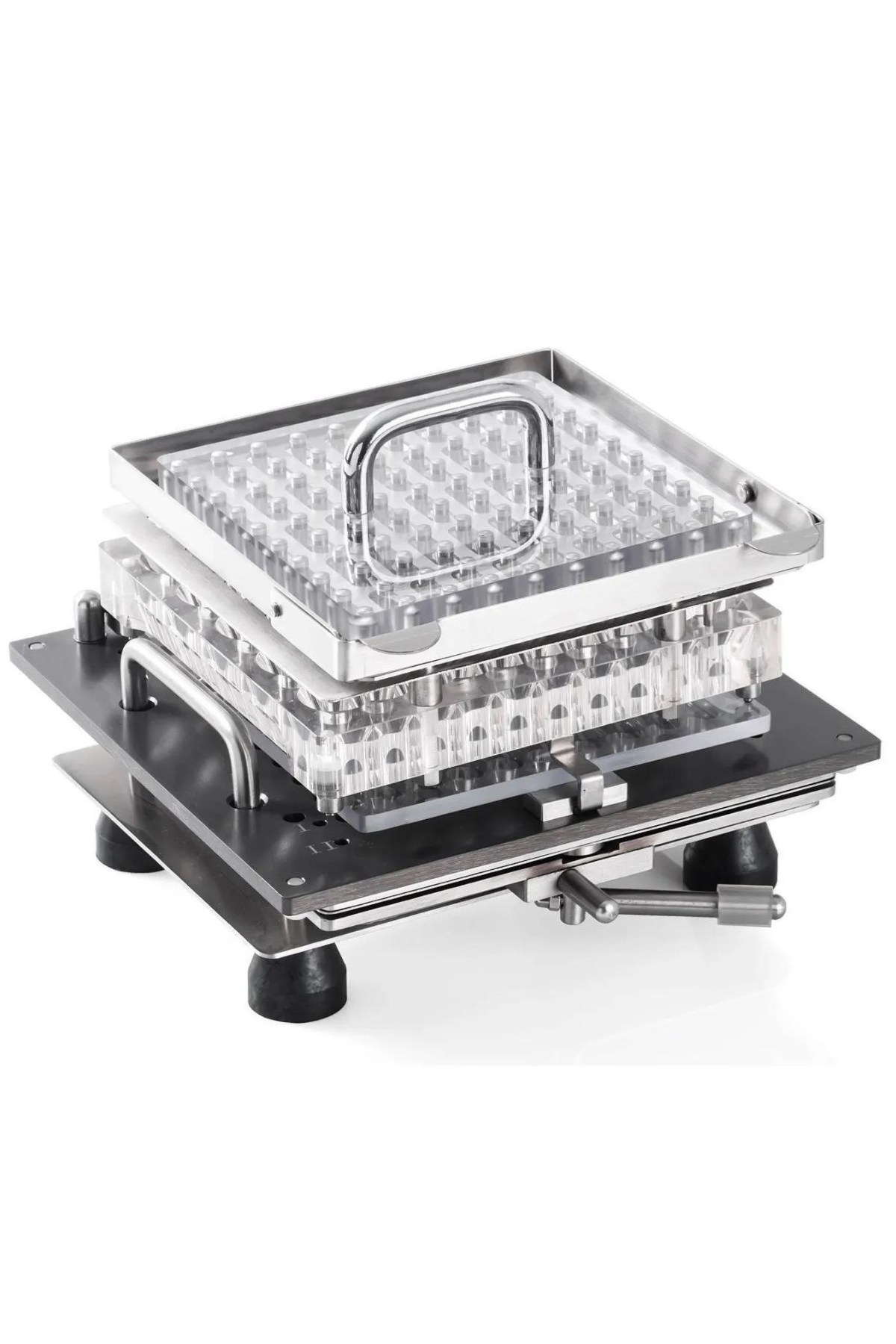
A manual capsule filling machine is often the best choice for supplement startups, pilot batches, and smaller production runs. It keeps the initial investment low and offers good flexibility for testing formulas and capsule types.
In real production, manual capsule filler output is usually measured by:
- how many capsules fit in the tray or plate
- how many complete cycles the operator can finish per hour
Typical Manual Capsule Filler Output
For many 100-hole manual capsule fillers, a realistic output range is:
- 2,000 to 2,500 capsules per hour for most users
- up to around 4,000 capsules per hour in very efficient conditions with an experienced operator and smooth-flowing powder
This means a manual setup can work very well for:
- new supplement brands
- small custom batches
- R&D work
- early-stage in-house production
However, once demand increases, manual filling often becomes more limited by labor and time than by machine cost.
Browse manual capsule filling machines: Manual Capsule Filling Machines
Semi-Automatic Capsule Filling Machine Output
A semi-automatic capsule filling machine is the most common upgrade path for growing supplement brands. It sits in the middle ground between low-cost manual filling and high-investment automatic production.
Compared with manual equipment, semi-automatic machines improve output by reducing repetitive manual handling and creating a faster, more controlled workflow.
Typical Semi-Automatic Output Range
Depending on the model, capsule size, material behavior, and operator familiarity, a semi-automatic capsule filler typically produces:
- 10,000 to 30,000+ capsules per hour
This is a major jump from manual production and is often the point where a supplement brand can begin operating with a much more stable and scalable production schedule.
A semi-automatic machine is often the right fit when:
- manual filling is consuming too much labor
- batch size keeps increasing
- the brand needs better consistency
- production is becoming a bottleneck to growth
Explore semi-automatic capsule filling machines: Semi-Automatic Capsule Filling Machines
Automatic Capsule Filling Machine Output
An automatic capsule filling machine is designed for brands and manufacturers that need large-scale, repeatable output with less dependence on manual labor.
For most early-stage supplement businesses, this is not the first step. But for more established operations, automatic filling becomes attractive when higher throughput and stronger process control are needed.
Typical Automatic Output Range
Depending on the model and setup, an automatic capsule filling machine can typically produce:
- 30,000 to 100,000+ capsules per hour
At this level, the conversation shifts from “Can I produce this batch?” to “How do I build a more complete and efficient production line?”
Automatic capsule filling becomes most relevant when a business is handling:
- high monthly volume
- larger recurring orders
- longer and more consistent production runs
- expansion into fuller packaging and line automation
View automatic capsule filling machines: Automatic Capsule Filling Machines
Capsules per Hour by Machine Type: Quick Comparison
| Machine Type | Typical Output Range | Best For |
|---|---|---|
| Manual capsule filler | 2,000 to 2,500 capsules/hour (up to ~4,000 in strong conditions) | Startups, pilot batches, low-volume production |
| Semi-automatic capsule filling machine | 10,000 to 30,000+ capsules/hour | Growing brands, stable orders, scalable small manufacturing |
| Automatic capsule filling machine | 30,000 to 100,000+ capsules/hour | High-volume operations and more advanced production lines |
How to Estimate Your Real Production Needs
Instead of asking only “How many capsules per hour can the machine make?” it is smarter to ask:
- How many capsules do I need per batch?
- How many batches do I need per week or month?
- How many labor hours am I willing to spend on filling?
- What happens if demand doubles?
For example:
- 500 bottles per batch
- 60 capsules per bottle
- = 30,000 capsules per batch
At that point:
- a manual setup may still work, but it could consume a large part of the production day
- a semi-automatic machine could complete the batch much faster and with less labor strain
- an automatic machine may be unnecessary unless volume is much higher or growth is accelerating rapidly
That is why the best machine is not the one with the biggest number. It is the one that best matches your current output needs and next growth stage.
When Output Alone Should Not Drive the Decision
Output is critical, but it should not be the only factor. You should also consider:
- budget
- available labor
- space and utilities
- consistency requirements
- future upgrade plans
For example, a startup may not need a semi-automatic machine yet even if it wants one. A more mature brand may find that manual filling is no longer worth the labor cost even if it still “works.”
This is why capsule filling equipment should be chosen as part of a broader production strategy, not just a speed comparison.
When Should You Upgrade Based on Capsule Output?
As a general rule, you should begin thinking seriously about upgrading when:
- manual filling is taking too many hours per batch
- labor fatigue is affecting consistency
- your order volume is growing steadily
- production is beginning to slow down fulfillment or expansion
For many brands, the most logical next step is to move from manual to semi-automatic capsule filling once output expectations become too large for a lean startup workflow.
If you want a deeper comparison, see our guide on manual vs semi-auto vs automatic capsule filling machines and our article on when to upgrade from manual to semi-automatic capsule filling.
Why Capsule Quality Also Affects Output
Machine choice is not the only thing that determines speed. Your capsule supply also matters.
Low-quality or inconsistent capsules can affect:
- machine feeding
- filling efficiency
- locking performance
- overall production flow
Choosing the right empty capsules for your machine and product type helps support smoother production and more predictable output.
Shop empty capsules for your production setup: Buy Empty Capsules
How Leadlife Health Helps You Match Output to the Right Production Stage
At Leadlife Health, the goal is not just to quote a machine based on a headline output number. The goal is to help supplement brands choose equipment that fits their real production stage, current batch needs, and next step in growth.
That means thinking through:
- how many capsules you need per batch
- how much labor your current process consumes
- whether manual filling is still efficient
- when semi-automatic or automatic equipment becomes the smarter move
Whether you are just starting small-scale production or planning the next stage of capacity, the right decision is the one that matches both your current reality and your future path.
- Browse manual capsule filling machines for lean startup production.
- Explore semi-automatic capsule fillers for higher output and lower labor strain.
- View automatic capsule filling machines for larger-scale operations.
- Shop bulk empty capsules that support smoother filling workflows.
FAQ: Capsule Filler Output for Supplement Brands
How many capsules per hour can a manual capsule filler produce?
A manual capsule filler typically produces around 2,000 to 2,500 capsules per hour for most users. In efficient conditions with an experienced operator and smooth-flowing powder, output can sometimes reach close to 4,000 capsules per hour.
How many capsules per hour can a semi-automatic capsule filling machine produce?
A semi-automatic capsule filling machine typically produces around 10,000 to 30,000+ capsules per hour, depending on the model, powder behavior, capsule size, and workflow organization.
How many capsules per hour can an automatic capsule filling machine produce?
An automatic capsule filling machine typically produces around 30,000 to 100,000+ capsules per hour, depending on the model and production conditions.
What affects capsule filler output the most?
The biggest factors are machine type, operator experience, capsule size, powder flow, and how well the overall workflow is organized. Output is not determined by machine type alone.
Should I choose a machine only based on capsules per hour?
No. Capsules per hour is important, but the right machine also depends on your budget, labor capacity, production stage, available space, and how quickly you expect your output needs to grow.